
To prevent ice dams on your Indianapolis roof, keep your attic cold and your roof deck uniformly cold by sealing air leaks, adding attic insulation to roughly R-49, and balancing intake and exhaust ventilation so heat does not escape and melt the snow above. Ice dams form when warm air from the living space below heats the roof deck, melts the underside of the snowpack, and that meltwater refreezes at the cold eaves and gutters, where there is nothing warm beneath it. The fix is almost never the gutters or the shingles themselves; it is the building science in your attic.
Central Indiana is a textbook ice-dam climate. Indianapolis winters swing through repeated freeze-thaw cycles, with daytime sun and attic heat melting snow and overnight lows in the teens and 20s refreezing it at the roof edge. After a heavy lake-effect-adjacent snowfall followed by a cold snap, homes across Marion, Hamilton, and Hendricks counties grow thick ridges of ice and dagger-like icicles along their eaves. This guide explains exactly why that happens and how to engineer the problem out of your home for good, rather than chipping at the symptoms every January.
An ice dam is a ridge of ice that forms at the edge of a roof and prevents melting snow from draining off. Behind that simple definition is a chain reaction driven by temperature differences across your roof. The center of the roof, sitting over your heated attic, gets warm enough to melt the bottom layer of snow. That meltwater runs down the slope until it reaches the eaves and the overhang, which extend past the warm interior and stay at outdoor temperature. There, the water refreezes. Repeat this over several days and the ice grows into a dam that traps more meltwater behind it.
The trapped water is the real danger. It pools behind the dam, finds its way under the shingles, and works its way into the roof deck, soffits, walls, and ceilings. By the time you see a brown stain on a bedroom ceiling, water has often been sitting in your roof assembly for days.
Indianapolis homes face this for three compounding reasons: a winter climate with frequent freeze-thaw swings, a large stock of older homes with under-insulated and poorly ventilated attics, and roof designs with valleys, dormers, and complex eaves that create natural cold spots. If your home checks even one of these boxes, ice dams are a question of when, not if.
Because ice dams are a heat problem, the durable solution lives in your attic, not on your roof surface. The goal is a roof deck that stays a uniform cold temperature, close to the outdoor air, so the snowpack melts evenly from the top down by sun and warm days rather than from the bottom up by escaping house heat. Building scientists describe this as keeping a cold roof, and it rests on three pillars working together: air sealing, insulation, and ventilation.
Air sealing comes first because it is the most common failure point. Gaps around recessed lights, bathroom fans, plumbing stacks, the attic hatch, and the top plates of walls let warm, moist air leak straight into the attic. Insulation slows heat that conducts through the ceiling, but it does almost nothing to stop air that leaks through holes, so insulation laid over unsealed gaps underperforms badly. Sealing those penetrations with foam, caulk, and weatherstripping is the highest-value first step.
Ventilation is the third pillar. A properly vented attic pulls cold outdoor air in at the soffits and exhausts it at the ridge, flushing out any heat and moisture that does get through. When intake and exhaust are balanced, the underside of the roof deck stays cold and dry. Our energy efficiency and roofing performance work treats these three pillars as one system rather than three separate upgrades, which is the only way the fix actually holds.
Indianapolis sits in U.S. Department of Energy climate zone 5, where the recommended attic insulation level is R-49 to R-60. Many older Central Indiana homes were built with R-19 or R-30 attics, or have settled and compressed insulation that no longer performs near its rating. Topping up to R-49 or better, after air sealing, dramatically reduces the heat reaching your roof deck and is one of the most cost-effective improvements you can make for both ice dams and winter heating bills.
Pay special attention to the eaves. The few feet of attic directly above the exterior walls are where insulation is most often thin or missing, because the roof slope pinches down to meet the wall and there is little room. That is also exactly where ice dams form. Proper installation uses insulation baffles to maintain an air channel from the soffit while still carrying insulation out as far as possible over the wall top plate, sealing the warm zone all the way to the edge.
If you are already planning insulation upgrades, our attic insulation service handles the air-sealing and baffle details that DIY blow-in jobs usually miss, so the new R-value actually does its job at the eaves where it matters most.
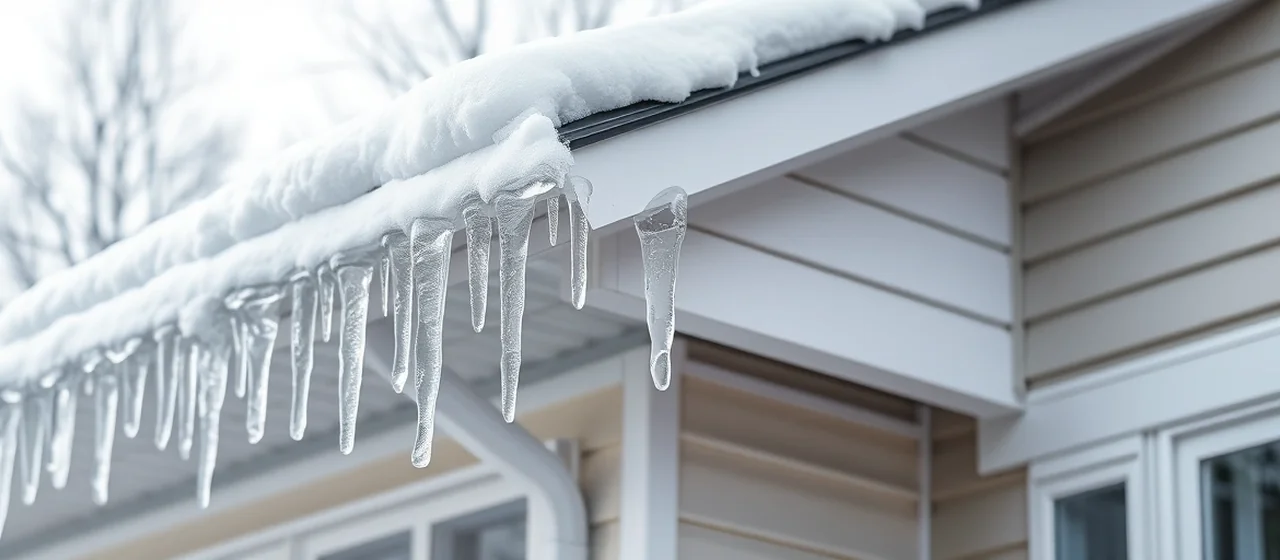
Attic work prevents most dams, but the roof itself should also be built to survive the ones that still form during extreme weather. The most important roof-side defense is a self-adhering ice-and-water membrane installed along the eaves beneath the shingles. Indiana practice, in line with code in cold climates, is to run this waterproof underlayment from the edge to at least 24 inches inside the warm wall line. Even if a dam forms and water backs up under the shingles, the membrane keeps it out of your home.
Anytime you replace a roof in Central Indiana, this is the moment to get the eave protection and ventilation right. A roof installation or replacement lets us install a continuous ice-and-water barrier, add or correct soffit and ridge ventilation, and engineer the whole assembly as a system. Retrofitting these details onto an existing roof is far more expensive than building them in during a planned replacement.
Heat cables, the zig-zag wires you see clipped to some eaves, are a last-resort tool, not a cure. They melt channels through the ice so water can drain, which can prevent a backup on a problem section, but they consume electricity, have a limited lifespan, and never address the heat loss causing the dam. Use them only as a targeted patch on a stubborn area while you plan the real attic fix.
Catching an ice dam early limits the damage. The clearest outdoor sign is large icicles hanging from the gutters and roof edge, paired with a visible ridge of ice along the eaves. Inside, watch for water stains or peeling paint on ceilings and upper walls, damp spots near the top of exterior walls, and moisture in the attic. Uneven snowmelt on your roof, where the field is bare but the eaves stay snow-covered, is an early tell that your attic is leaking heat.
If a dam has already formed and water is entering the home, do not climb onto an icy roof and do not try to break the ice off with a hammer or hatchet, which damages shingles and risks serious injury. The safer immediate steps are to gently rake snow off the lower few feet of roof from the ground with a roof rake, and to create drainage channels carefully. For active interior leaking, this is an emergency roof situation and the priority is stopping water intrusion before it spreads through the ceiling and walls.
Because Indianapolis storms often combine heavy snow with the wind and ice that damage shingles outright, an ice-dam event can mask other roof damage. After the thaw, a professional roof inspection confirms whether the dam compromised your underlayment, flashing, or decking, so a one-time leak does not become a recurring one.
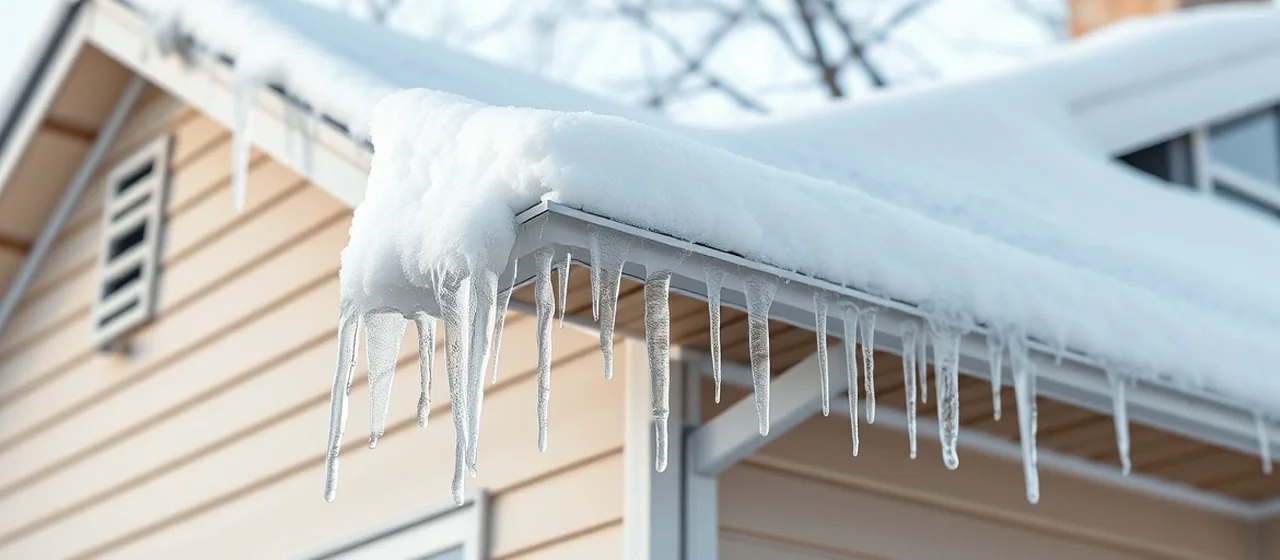
Every winter, homeowners try to solve ice dams at the gutters, throwing on bigger downspouts, adding heat cable, or paying someone to steam the ice off after every storm. These treat the symptom and leave the cause, the warm roof deck, fully intact. The dam comes back the next cold snap, and the recurring service calls quietly cost more than fixing the root problem once.
The holistic approach is to diagnose the heat path. Where is warm air escaping into the attic? Is the insulation sufficient and continuous to the eaves? Is the ventilation balanced from soffit to ridge? Is the eave waterproofed beneath the shingles? When all of those are correct, the roof deck stays cold, the snow melts evenly off the top, and the dam never forms in the first place. That is the difference between engineering the system and patching it.
It also pays off beyond winter. The same air sealing and insulation that stop ice dams cut heating and cooling bills year-round, reduce attic moisture and the mold it feeds, and extend the life of your shingles by keeping the deck cooler in summer. One well-designed fix solves several problems at once, which is exactly how a roof and attic should be engineered.
Tired of icicles, leaks, and steaming the same eaves every winter? Alpha Holistic Roofing diagnoses the heat path through your attic and engineers a real fix, air sealing, insulation, ventilation, and eave protection working as one system. Serving Indianapolis and Central Indiana.
Explore Energy-Efficiency RoofingCall (219) 221-9617Ice dams form when heat escaping from your living space warms the roof deck and melts the bottom of the snowpack. That meltwater runs down and refreezes at the cold eaves and gutters, where there is no warmth beneath it. The ice builds into a ridge that traps more water, which then backs up under the shingles and into the home.
Keep the attic cold by sealing air leaks around lights, fans, and the attic hatch, adding insulation to about R-49 for the Indianapolis climate, and balancing soffit intake with ridge exhaust ventilation. When the roof deck stays uniformly cold, snow melts evenly from the top and dams never form. Add ice-and-water shield at the eaves during any roof replacement for backup protection.
Indianapolis is in climate zone 5, where R-49 to R-60 is recommended for attics. Many older Central Indiana homes have only R-19 or R-30, or compressed and settled insulation. Air sealing first, then topping up to at least R-49, especially out at the eaves, is one of the most effective ways to stop ice dams and cut heating bills.
Heat cables melt drainage channels through the ice but do not fix the underlying heat loss, so the dam keeps returning. They are a targeted last-resort patch for a stubborn section, not a cure. They use electricity, wear out, and should only buy you time while you address the attic air sealing, insulation, and ventilation that actually stop dams.
Never chip at ice with a hammer or hatchet or climb onto an icy roof; both damage shingles and risk serious injury. From the ground, you can gently rake snow off the lower few feet of roof with a roof rake to reduce the dam. If water is already entering your home, treat it as an emergency and call a roofing professional immediately.
Many Indiana homeowners policies cover sudden interior water damage from an ice dam, such as a stained ceiling, but typically not the cost of removing the ice or fixing the underlying insulation and ventilation that caused it. Coverage varies, so review your policy and document any damage with photos before cleanup, then get an inspection to confirm the full extent.