
The short answer: choose TPO for a balance of cost, energy efficiency, and a heat-welded seam; choose EPDM for the longest track record and the best value on large, simple roofs; and choose PVC when grease, chemicals, or ponding water are in play and you need the most chemically resistant, longest-lasting membrane. All three are single-ply systems that cover the low-slope and flat roofs common on Indianapolis commercial buildings, additions, and modern homes, but they are not interchangeable. The right pick depends on your roof's slope, what passes over it, your budget, and how the membrane will handle Central Indiana's freeze-thaw swings and storm season.
This guide breaks down each membrane the way a roofing engineer would: how it is made, how the seams are joined, what it costs in Indiana, how long it actually lasts, and where each one wins or loses. Our goal is to help you specify a system that fits your building, not to sell you on a single product. When you understand the trade-offs, you can engineer the roof as a system instead of patching whatever a salesperson stocks.
TPO, EPDM, and PVC are all single-ply membranes, large sheets of synthetic material rolled out over insulation and a flat or low-slope deck, then joined at the seams to form one continuous waterproof surface. They replaced older multi-layer tar-and-gravel and built-up roofs on most modern low-slope buildings because they are lighter, faster to install, and far easier to inspect and repair. If you are weighing them against older systems, our overview of single-ply roofing systems explains where each fits.
The two big families are thermoset and thermoplastic. EPDM is a thermoset rubber: once cured it cannot be re-melted, so its seams are bonded with adhesive tapes or liquid adhesives. TPO and PVC are thermoplastics, which means their seams are heat-welded with a hot-air gun that fuses two sheets into a single piece of plastic. That welded seam is the single biggest practical difference between the rubber and the plastic membranes, and it drives most of the long-term performance gap.
Slope matters too. These systems are built for roofs under roughly 3-in-12 pitch, where shingles or panels would not shed water reliably. If your building has a true flat or low-slope deck, the membrane choice sits inside the larger conversation about flat and low-slope roofing systems and how the deck, insulation, drainage, and edge details all work together.
EPDM (ethylene propylene diene monomer) is a synthetic rubber that has been on commercial roofs since the 1960s, which gives it the longest real-world track record of the three. It is most often black, ships in very wide rolls, and is prized for flexibility, it stays pliable in cold weather, which is a genuine advantage during an Indiana January when other membranes get stiff. That cold-weather flexibility makes EPDM a strong performer against freeze-thaw stress.
Its weaknesses are seams and color. Because EPDM is glued rather than welded, the seams are the most common failure point as adhesives age, and field repairs to old taped seams require care. Standard black EPDM also absorbs heat, which raises rooftop and attic temperatures in summer; a white or 'ballasted' version costs more and narrows the price advantage that is EPDM's main selling point.
EPDM is usually the most economical single-ply for large, simple roofs with few penetrations, think warehouses, big-box retail, and open commercial decks. On a complex roof with many curbs, pipes, and equipment, the labor to detail all those glued transitions can erode its cost edge versus a weldable membrane.
TPO (thermoplastic polyolefin) is the most widely installed single-ply membrane in North America today, and for good reason: it pairs a heat-welded seam with a naturally white, highly reflective surface at a moderate price. The welded seam is generally stronger than the membrane sheet itself, eliminating the adhesive-aging problem that haunts older EPDM, while the reflective surface bounces solar heat away. On a Central Indiana building with summer cooling bills, that reflectivity ties directly into energy-efficiency roofing performance and can lower attic and interior temperatures.
TPO's main caution is product consistency. Because the formula has evolved over the years and quality varies between manufacturers, it is important to specify a reputable, thicker membrane (60-mil or heavier) and a proven manufacturer rather than the cheapest sheet available. Thin, low-grade TPO is where the material earned its early reputation for premature weathering; modern, properly specified TPO is a very different product.
For most Indianapolis commercial and industrial buildings, TPO hits the sweet spot of cost, energy savings, and weldable durability. It is frequently the default recommendation for new commercial roofing installations where the owner wants reflectivity and a welded seam without paying for full PVC chemical resistance.
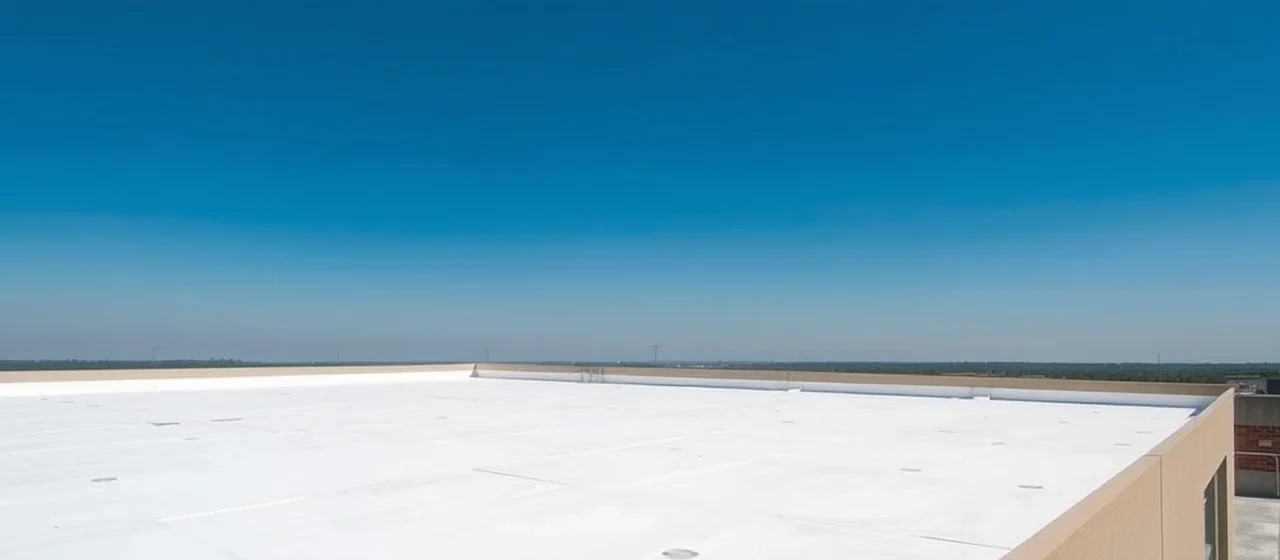
PVC (polyvinyl chloride) is the oldest thermoplastic roofing membrane and generally the most durable and chemically resistant of the three. Like TPO, its seams are heat-welded into a monolithic surface, but PVC adds outstanding resistance to grease, oils, animal fats, and chemicals, which is exactly why it is the standard choice for restaurants, commercial kitchens, and any building where exhaust vents discharge oily residue onto the roof. It also tolerates ponding water better than the alternatives, an advantage on older decks that do not drain perfectly.
PVC stays flexible over time thanks to plasticizers, and it carries strong fire and wind ratings, which is why it shows up so often on schools, hospitals, and manufacturing plants. Those properties make it a frequent specification for demanding industrial roofing environments where chemical exposure or fire performance is non-negotiable.
The trade-off is price: PVC is the most expensive of the three per square foot. For a clean, dry roof with no chemical exposure, you may be paying for resistance you will never use. But where grease, chemicals, or chronic ponding are present, PVC is often the only membrane that will deliver its full service life, and the premium pays for itself in avoided early replacement.
When you line the three up, the decision usually comes down to four questions: How simple is the roof? What passes over it? How much reflectivity do you need? And what is the budget? In Central Indiana, the climate adds a fifth: how will the membrane handle freeze-thaw cycling and storm-season hail and wind?
Cold flexibility favors EPDM, but welded seams favor TPO and PVC, and a welded seam that never relies on aging adhesive is a meaningful durability advantage through repeated freeze-thaw expansion and contraction. For reflectivity and summer cooling, TPO and white PVC lead; standard black EPDM trails. For chemical and grease resistance, PVC is in a class of its own. For lowest upfront cost on a big, simple roof, EPDM usually wins.
No matter which membrane you choose, the membrane is only as good as the deck, insulation, drainage, and flashing details beneath and around it. A heat-welded seam means nothing if the parapet flashing or drain detail is wrong, which is why our flat roof installation and replacement work treats the membrane as one part of an engineered system rather than the whole answer.
Whichever membrane you pick, installation quality and ongoing maintenance determine whether you get 15 years or 30. The most common failures on single-ply roofs are not material defects, they are seam, flashing, and penetration problems, plus damage from foot traffic and debris. A simple annual or twice-yearly roof inspection catches small punctures, lifting seams, and clogged drains before they become interior leaks.
Indiana storm season is the other wildcard. Hail and wind-driven debris can puncture or scuff a membrane, and standing damage often hides until the next heavy rain. After a major storm, prompt storm and emergency roofing response and documentation protect both the roof and any insurance claim. For chronic but minor wear, a reflective roof coating can renew the surface and add years before a full replacement is needed, a cost-effective middle step that many building owners overlook.
An aging single-ply roof rarely needs to be torn off all at once. Targeted seam repairs, re-flashing, and coatings can extend service life significantly, and a good inspection report will tell you honestly whether repair or replacement is the smarter spend. That honest, system-first assessment is the difference between patching symptoms and engineering a lasting fix.
Our team will inspect your deck, drainage, and rooftop conditions and recommend the single-ply system that actually fits your building and budget, no upselling. Get a clear, honest assessment for your Indianapolis flat or low-slope roof.
Explore Single-Ply RoofingCall (219) 221-9617There is no single winner, it depends on the roof. EPDM is best for low cost on large, simple roofs; TPO is best for a balance of reflectivity, welded seams, and moderate price; and PVC is best where grease, chemicals, or ponding water demand maximum resistance. The right choice comes from matching the membrane to your slope, rooftop conditions, and budget.
With quality installation and regular maintenance, all three typically last 20-30 years. PVC often reaches the high end or beyond, EPDM has the longest field track record, and modern thicker TPO performs comparably. Seam quality, flashing details, and inspections matter more to lifespan than the material brand alone.
EPDM is usually cheaper in material cost, especially on large, simple roofs with few penetrations. TPO is moderately priced but adds a reflective surface and welded seams. On complex roofs with many curbs and pipes, TPO's faster welded detailing can narrow or even close the cost gap.
PVC resists grease, oils, and animal fats far better than TPO or EPDM. Restaurant and kitchen exhaust vents discharge oily residue onto the roof, which degrades other membranes over time. PVC's chemical resistance lets it deliver full service life in that harsh environment, which is why it is the standard choice for food-service buildings.
EPDM stays the most flexible in cold weather, which helps it absorb freeze-thaw expansion and contraction. However, TPO and PVC have heat-welded seams that do not rely on aging adhesives, giving them a durability edge through repeated cycling. A correctly installed system of any of the three handles Central Indiana winters well.
Often yes. A reflective roof coating can renew a worn but structurally sound single-ply membrane, seal minor seam and surface wear, and add several years of life at a fraction of replacement cost. An inspection determines whether coating, targeted repair, or full replacement is the smarter investment.