
Synthetic-rubber single-ply membrane engineered to flex through Indiana's freeze-thaw winters without cracking. We don't just unroll a black sheet and tape the seams, we engineer an EPDM rubber roof as one continuous assembly, from the deck and insulation to every welded-tight termination.
Fast. Accurate. Transparent.
By submitting, you agree to our Privacy Policy.
EPDM, short for ethylene propylene diene monomer, is the proven rubber membrane that built the modern flat roof. Its single greatest strength is cold-weather flexibility: an epdm rubber flat roof stays elastic when an Indianapolis January swings from 40 degrees to single digits in a week, the exact freeze-thaw cycling that splits brittle materials. Our epdm roofing installation treats the membrane as one layer of a complete envelope rather than a tarp over a problem, which is why we spec the insulation, cover board, and attachment method before we ever roll out rubber.
This page sits under our single-ply roofing systems pillar, where EPDM lives alongside thermoplastic options. Where that pillar compares the three membrane families, here we go deep on rubber alone: the three ways to attach it, the thickness and color choices, the seam chemistry, and the Indianapolis-specific cost factors. If your roof leans toward reflectivity or chemical resistance instead, our single-ply roofing systems team will steer you to a TPO roofing membrane instead, no hard sell.
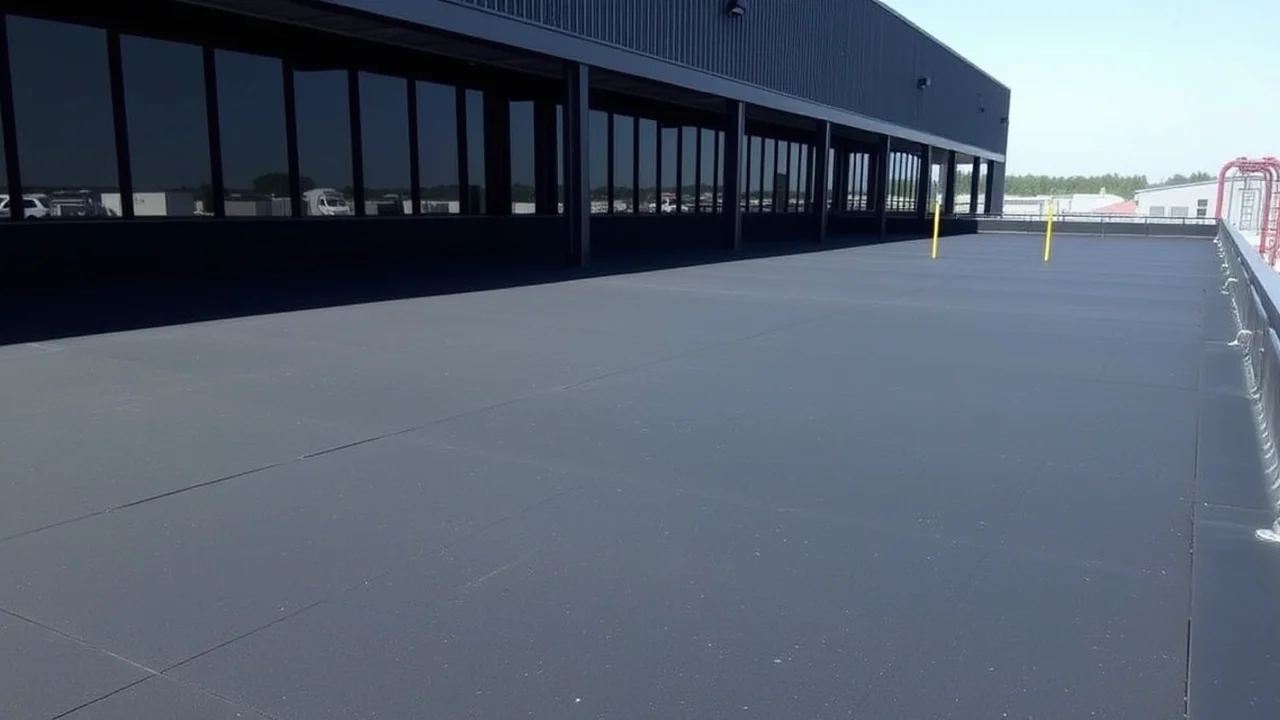
An EPDM rubber roof is defined as much by how it is attached as by the sheet itself. We engineer the right assembly for your deck, building height, and Indianapolis wind exposure.
The membrane is bonded to the substrate with bonding adhesive across the entire field, leaving no gap for wind uplift to grab. A fully-adhered epdm rubber roof gives the cleanest, tightest finish and is our default for visible low-slope homes and high-wind Indianapolis rooflines.
Plates and screws anchor the epdm roof membrane to the deck along seam lines, then sheets lap over the fasteners. Faster and more budget-friendly on large commercial decks, this method keeps epdm commercial roofing projects on schedule without sacrificing wind rating.
Loose-laid rubber held down by river rock or pavers, no adhesive or fasteners penetrating the field. Ballasted assemblies suit flat decks that can carry the weight and are the lowest-cost path to a flat epdm roof on the right structure.
Standard black rubber absorbs heat and speeds snowmelt, ideal for cold-leaning buildings. A white epdm roofing option adds a reflective surface that trims summer cooling load. We match color to your insulation, HVAC, and how much sun the roof takes.
EPDM ships in 45-mil and heavier 60-mil epdm rubber roofing membrane thicknesses (90-mil for ballasted). Thicker rubber resists hail and foot traffic better and carries longer warranties. We size the roll to your roof's exposure rather than defaulting to the thinnest sheet.
An EPDM roof fails at its seams and terminations long before the field rubber wears out, so that is exactly where our holistic process concentrates. We prep the deck, dial in the insulation, and bond every lap and edge so the finished epdm rubber roof performs as one engineered system instead of a loose sheet waiting for the next storm.
Most rubber-roof leaks trace back to a seam that was never primed correctly, a shrunken edge that pulled a flashing loose, or a pipe boot that cracked. We prime, tape, roll, and re-terminate every transition so the membrane stays continuous from field to parapet.
Not sure whether EPDM is the right rubber for your Indianapolis flat roof? Call the holistic roofing team at (219) 221-9617 and we will spec the system to your building before quoting a dollar.
Rubber is the most budget-friendly single-ply membrane, but the final number depends on attachment method, thickness, and what the deck needs underneath. Here is how we frame the EPDM decision for Indianapolis flat and low-slope roofs.
Most epdm roofing installation in the Indianapolis metro runs roughly 5.50 to 9.50 dollars per installed square foot. Ballasted is the cheapest, mechanically-fastened sits in the middle, and fully-adhered costs the most for its clean, high-wind finish. Membrane thickness (45 vs 60 mil), insulation depth, roof access, and how much tear-off or wet-deck repair is required all move the number. We give an itemized estimate after an on-site inspection, never a phone guess.
A properly engineered flat epdm roof routinely delivers 20 to 30 years in Indiana. Rubber's elasticity is what carries it through hard freeze-thaw winters, the membrane expands and contracts without cracking where rigid materials split. Black absorbs heat to clear snow faster; white epdm roofing reflects summer UV to slow aging and ease cooling load. Either way, the seams and terminations decide the real lifespan, not the field rubber.
Aging rubber rarely needs a full tear-off first. Seam separation, punctures, and shrunken flashings are usually repairable, and a liquid epdm roof coating can restore a sound-but-tired membrane and reset its warranty clock. We core-sample saturated decks and tell you honestly which path fits, often routing restoration through our roof coatings and protective systems instead of selling a replacement you do not need.
If your priority is summer reflectivity or chemical and grease resistance, a TPO roofing membrane or PVC roofing membrane may fit better than rubber, and we will tell you so plainly. EPDM, TPO, and PVC all live inside our single-ply roofing systems lineup so the membrane choice always fits the wider envelope.
EPDM protects warehouses, low-slope additions, porch roofs, and modern flat-roof homes from Carmel and Fishers to Zionsville, Noblesville, and Greenwood. Because rubber is one layer of a larger envelope, we connect it to the rest of your roof: EPDM is one of three membranes inside our single-ply roofing systems pillar, sits alongside the energy-focused TPO roofing membrane when reflectivity matters, and ties the whole flat-roof assembly back to our flat and low-slope roofing systems work. When a rubber roof springs a leak between scheduled visits, our storm and emergency roofing crews stop it fast. That is the Envelope Approach, systems over patches, from the deck to the last rolled seam.
Licensed, insured, and OSHA-compliant, with manufacturer-backed materials and a 4.9/5 rating from 500+ neighbors. We engineer systems, not patchwork, and we put it in writing.
“Our flat porch roof leaked every spring no matter how many times it got patched. Alpha tore it down to the deck, fixed the rot, and installed a fully-adhered EPDM membrane. Two winters of freeze-thaw later and not a single drip. They explained black versus white rubber instead of just selling the cheapest sheet.”
Derek M., Fishers
“We needed a budget-friendly membrane for a large warehouse deck and they spec'd mechanically-fastened EPDM to keep the cost down without giving up the wind rating. The seams were primed, taped, and rolled tight, and they pressure-tested every lap before they left. Engineered, not slapped on.”
Sandra K., Greenwood
“Three other crews wanted to rip off our aging rubber roof. Alpha core-sampled it, found the deck was still sound, and saved us thousands with a white EPDM coating that reset the warranty. Honest people who clearly know flat roofs and didn't oversell us.”
Marcus T., Carmel
Most EPDM projects in the Indianapolis metro run roughly 5.50 to 9.50 dollars per installed square foot, which makes rubber the most budget-friendly single-ply membrane. The number depends on the attachment method (ballasted is cheapest, mechanically-fastened is mid-range, fully-adhered costs the most), the membrane thickness (45 vs 60 mil), insulation depth, roof access, and how much tear-off or wet-deck repair is required. We provide a transparent, itemized estimate after a free on-site inspection rather than quoting blind over the phone.
A properly engineered EPDM rubber flat roof typically lasts 20 to 30 years in the Indianapolis climate. Rubber's elasticity is what carries it through hard freeze-thaw winters, since the membrane expands and contracts without cracking where rigid materials split. The real lifespan is decided by the seams and terminations, not the field rubber, which is why we prime, tape, roll, and pressure-test every lap and pair the roof with a maintenance plan.
EPDM can be fully-adhered (bonded across the whole field for the cleanest, highest-wind finish), mechanically-fastened (anchored with plates and screws along seams, faster and more affordable on large commercial decks), or ballasted (loose-laid under river rock or pavers, the lowest-cost option for decks that can carry the weight). There is no universal winner. We match the method to your deck, building height, and Indianapolis wind exposure during the inspection.
Standard black EPDM absorbs heat, which speeds snowmelt and suits cold-leaning Indianapolis buildings. White EPDM roofing adds a reflective surface that bounces summer UV away, slowing membrane aging and trimming cooling load during heat waves. The right color depends on your building's insulation, HVAC, and how much direct sun the roof takes. It also ties directly into our energy efficiency roofing enhancements, so we frame it as part of the whole envelope rather than just a color swap.
Yes. EPDM is excellent for residential flat and low-slope sections such as additions, porch roofs, dormers, and modern flat-roof homes. It is one of the most common rubber choices for simpler low-slope decks because it is budget-friendly and flexes well through Indiana winters. We weld, prime, and terminate residential EPDM to the same standard as our commercial work so a small flat section never becomes the leak that ruins the rest of the home.
Most EPDM problems are repairable. Seam separation, punctures, and shrunken edge flashings can usually be cleaned, re-primed, and re-bonded, and a liquid EPDM roof coating can restore a sound-but-tired membrane and reset its warranty clock. Full replacement makes more sense when the rubber is widely brittle, the deck is saturated with trapped moisture, or repairs are stacking up year after year. We core-sample questionable decks and tell you honestly whether to repair, recoat, or replace.