
Fixing a flat roof is not about smearing tar over the wet spot you can see. The leak that shows up on your ceiling almost never starts where it lands. We trace water back to the failed seam, flashing, or drainage point that actually caused it, then re-engineer that detail so the repair holds through Indiana's next freeze-thaw winter.
Fast. Accurate. Transparent.
By submitting, you agree to our Privacy Policy.
On a low-slope roof, water travels. It enters at a split seam or a lifted flashing, runs sideways across the insulation, and drips through the deck several feet away. That is why most flat roof repair in Indianapolis fails the second time: the previous contractor patched the drip, not the breach. We pull the membrane back, follow the moisture path, and find every entry point before we seal anything. This sub-service sits under our Flat & Low-Slope Roofing pillar, where you can compare repair against a full system replacement.
Indianapolis is hard on flat roofs in a specific way. Freeze-thaw cycles work water into hairline seam gaps overnight, then pry them wider every time the ice expands. Spring storms overload undersized scuppers and drains. Summer UV bakes older EPDM and modified-bitumen membranes brittle so they shrink away from the walls. We repair for those exact stresses. If your leak only appears after a storm, our storm & emergency roofing crews can stabilize the roof the same day before we schedule the permanent fix.
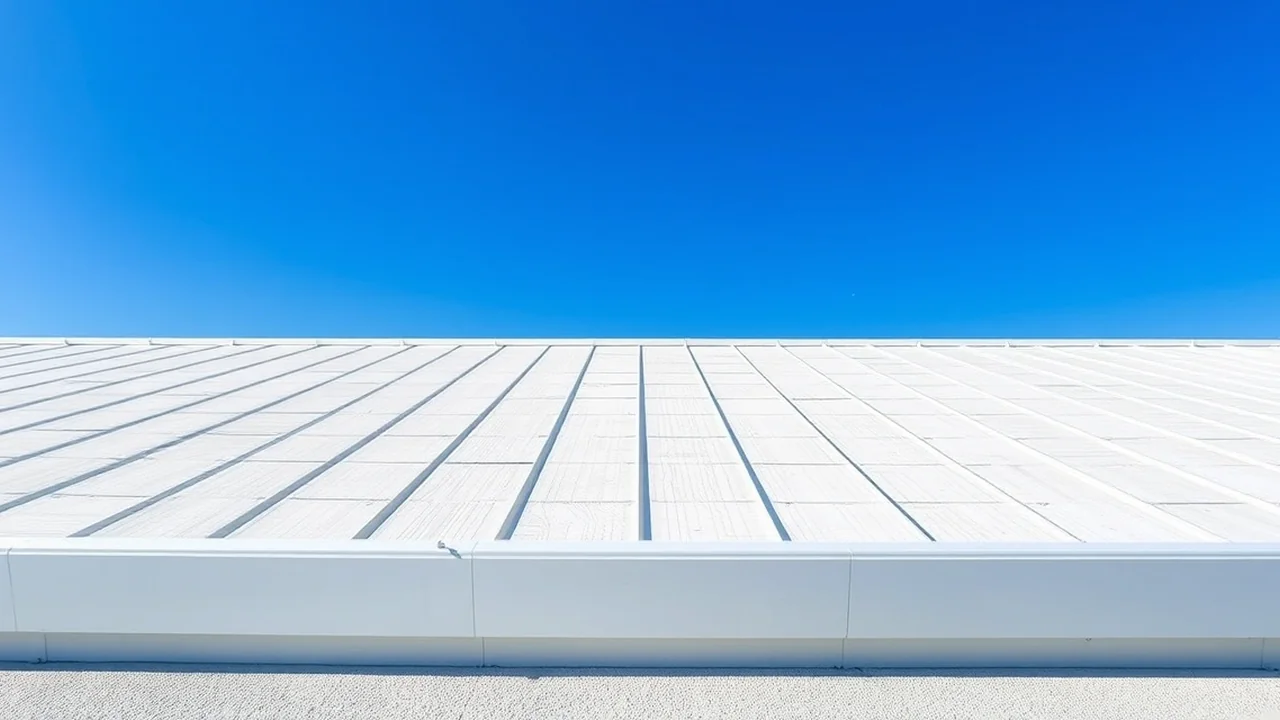
Fixing a flat roof means matching the repair to the failure and to the membrane you already have. Here are the most common repairs we perform on Indianapolis low-slope roofs.
Split, peeling, or fishmouthed seams are the number-one source of flat roof leaks. We heat-weld TPO and PVC seams, re-bond EPDM laps with new cover tape, and patch the membrane with matched material so the repair flexes with the roof instead of cracking apart next winter.
Walls, curbs, vents, drains, and HVAC penetrations are where most flat roof leaks actually begin. We strip and rebuild failed flashing details with proper termination bar, sealant, and counter-flashing so water has nowhere to wick behind.
Standing water that never clears is a design problem, not a surface to mop. We add tapered insulation crickets, re-pitch low spots, and clear or resize scuppers and internal drains so water leaves the roof within 48 hours of rain.
Trapped moisture or off-gassing under the membrane expands into blisters that eventually rupture. We cut out the blistered section, dry the substrate, and re-adhere a patch that bonds flat rather than letting the void grow.
When the membrane is generally sound but aging, a fluid-applied flat roof sealant or restoration coating re-waterproofs the whole surface and buys years before replacement. The right call when leaks are widespread but the deck is dry.
A lasting repair starts with an honest diagnosis. Before we quote a price, we map the whole low-slope assembly so we fix the cause and never just chase the drip. Here is what fixing a flat roof actually involves when it is done as a system.
Don't wait for the next rain to find out where the water goes. Call Indianapolis's holistic roofing team at (219) 221-9617 and we'll trace the leak to its real source before it soaks your insulation, rots the deck, or reaches your ceiling.
Active leak today? Our crews respond fast across the Indianapolis metro to tarp, dry, and stabilize before the permanent repair is scheduled.
There is no flat price for fixing a flat roof, because no two leaks are the same. These are the factors that move the number and the signals that tell us a repair is worth it versus a replacement.
Repair cost scales with how far the water traveled, not the size of the visible stain. A single seam or flashing fix is modest; recurring leaks tied to ponding or wet insulation cost more because we correct drainage and replace saturated layers. Membrane type, roof access, and how many entry points we trace all factor in. Every estimate is written and itemized after a free inspection.
If the membrane is generally sound, the deck is dry, and leaks are isolated to a few seams, flashings, or penetrations, a targeted repair or a protective coating is the smart, cost-effective fix. Most residential and commercial flat roofs in good shape fall here, and a clean repair adds years of service.
When the membrane is widely brittle, moisture is trapped across large areas, ponding is structural, or you're past three repair calls on the same spot, repair stops paying off. At that point we point you to flat roof replacement under our Flat & Low-Slope Roofing pillar so the next roof is built to drain, not just to be patched again.
Not sure which camp you're in? Our inspection gives you both numbers, so you can weigh an honest repair against a full system instead of guessing.
Flat roof repair is one service inside our Flat & Low-Slope Roofing pillar, and we treat it that way. If your leak traces back to the membrane class itself, we hand off to single-ply roofing systems for the right TPO, EPDM, or PVC detail; if a storm opened the seam, our storm & emergency roofing crews stabilize first. We serve both home and business across the Indianapolis metro, from low-slope porch additions in Carmel, Fishers, and Zionsville to commercial flat decks in Greenwood and downtown Indianapolis. One canonical, engineered repair, never a patchwork of contractors.
Licensed, insured, and OSHA-compliant, with manufacturer-backed materials and a 4.9/5 rating from 500+ neighbors. We engineer systems, not patchwork, and we put it in writing.
“Two roofers patched the same ceiling stain and it came right back. Alpha pulled the membrane, found the seam split four feet away, re-welded it, and ran a hose test before they left. First repair that actually held through winter.”
Renee K., Carmel
“Our shop's flat roof ponded after every rain. They explained it was a drainage design problem, added tapered insulation to push the water to the scupper, and the leaks stopped. They fixed the cause, not just the wet spot.”
Anthony D., Greenwood
“Honest crew. I expected them to push a full replacement and instead they coated the existing rubber roof and told me it had years left. Saved me thousands and the leaks are gone.”
Priya S., Fishers
Minor seam, flashing, or penetration repairs commonly run a few hundred dollars, while recurring leaks tied to ponding or wet insulation cost more because we correct the drainage and replace saturated layers, not just the surface. Cost depends on how far the water traveled, your membrane type, and roof access. We give a written, itemized estimate after a free inspection, with no surprise add-ons mid-project.
Because on a low-slope roof, water enters at one point and travels sideways across the insulation before it drips inside. If the last contractor patched the drip instead of the breach, the real entry point is still open. We trace the moisture back to its true source, which is usually a seam, flashing, or drain several feet from the stain, and repair that. This is the single biggest reason flat roof repairs fail twice.
Most can be repaired. If the membrane is generally sound, the deck is dry, and the leaks are isolated to a few seams, flashings, or penetrations, a targeted repair or restoration coating is the smart, cost-effective call. We recommend replacement only when the membrane is widely brittle, moisture is trapped over large areas, ponding is structural, or you're past three repair calls on the same spot. Our inspection gives you both numbers.
A properly engineered repair on a sound membrane typically lasts the remaining service life of the roof, often many years. A heat-welded TPO or PVC seam, a rebuilt flashing, or a re-bonded EPDM lap restores the original detail rather than covering it. Repairs fail early when they're done with mismatched material or when the underlying drainage problem is ignored, which is exactly what our process is built to prevent.
Yes. EPDM rubber flat roofs are very repairable. We clean and prime the area, then re-bond the seam or apply a matched cover-tape patch so it flexes with the membrane through freeze-thaw cycles. For older EPDM that's leaking in several places but still dry underneath, a fluid-applied coating can re-waterproof the entire surface at once. We'll tell you honestly which approach fits your roof.
Ponding happens when the roof has no positive slope to a drain, when scuppers or drains are clogged or undersized, or when the deck has sagged. It's a real problem: standing water accelerates membrane breakdown, adds dead load, and magnifies any small leak. A flat roof should still have a slight engineered pitch so water clears within 48 hours. When yours holds water for days, we correct it with tapered insulation or re-pitching during the repair, not by mopping the surface.
Yes. We repair low-slope porch and addition roofs on Indianapolis-area homes and full commercial flat decks for businesses across the metro, including Carmel, Fishers, Zionsville, Noblesville, and Greenwood. The diagnostic approach is the same for both: trace the leak to its real source, match the repair to your membrane, and fix the drainage so the repair actually holds.